Posts

My “here” is their “there”: The social context of social re-contextualization

Note: This was written originally as an assignment for a PhD course I took in the Winter of 2020. I've been revisiting some of my notes in preparation for an upcoming "comprehensive" exam, and this is one of the very rare examples of my past writings that I do not instinctively hate. In their seminal work on the sociology of knowledge,   The Social Construction of Reality   (1966), sociologists Peter Berger and Thomas Luckmann engage in an extended discussion of the formation, coexistence, and persistence of social institutions. Descended as they are from the Marxian paradigm that man’s consciousness is determined by his social being, Berger and Luckmann are fundamentally interested in the interplay between socially distributed “objective” reality, and internalized and interpreted individual “subjective” reality, and their treatment of social institutions reflects this interest. It is somewhat fitting, then, that their conception of institutions underwent this same proces...
Engaging with Online Discourse

Image
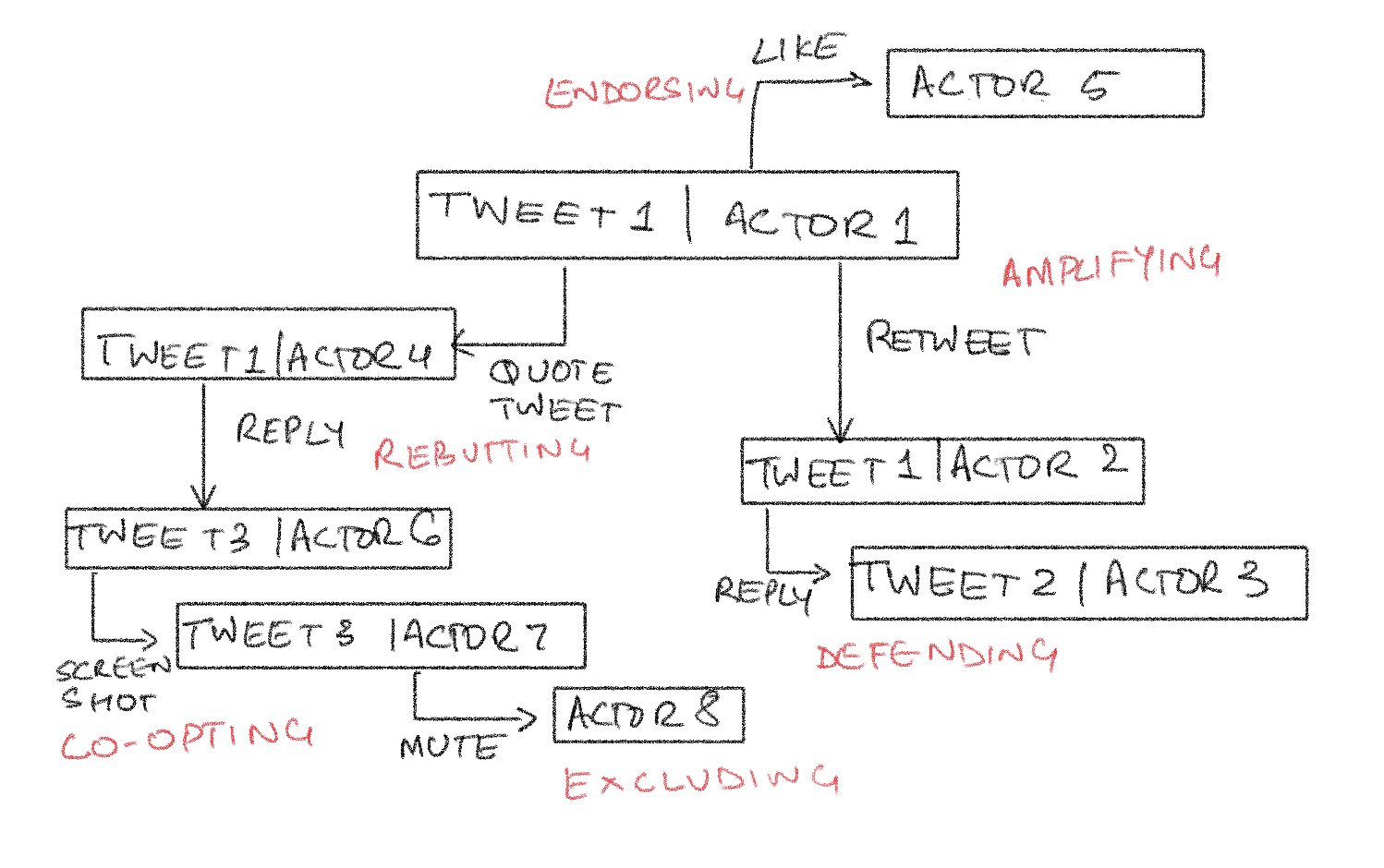
Over this summer, I've had the opportunity to experiment with the Twitter API's Academic Track product. I'm going to write about that today. I've been taking a break from this blog this summer to focus on my comprehensive exams (next month!) but I've been noodling around with some thoughts on online discourse and I feel its time to put something down in words. Plus its like a palette cleanser from the endless volumes of papers I have been reading, a chance to produce, instead of consuming.  First, some context: I love discourse. Words produced by people, intended often for other people to read. I like to look at it, understand the the motivations and intent behind words, to identify structures therein. And when I say structures, I mean the socially produced (often through repeated action) rules about what constitutes acceptable conduct given a particular social context, given the constraints and affordances of the technologies surrounding that social context. A  Gid...

The Action Cinemarathon

I'd like to go on an Action Cinemarathon.  My goal is to watch every movie recommended in each article in the very excellent ongoing column on action film history written by Tom Breihan over at AVClub :   A History of Violence With A History Of Violence, Tom Breihan picks the most important action movie of every year, starting with the genre’s birth and moving right up to whatever Vin Diesel’s doing this very minute. In his first article, titled " Action cinema begins with Steve McQueen and one incredible car chase " Breihan identifies 1968's  Bullitt  as his starting point for action cinema. Other noteworthy mentions from the article include Coogan's Bluff , western  Once Upon A Time in The West , and war movies The Green Berets , Ice Station Zebra , Where Eagles Dare .  Already you can see that this is going to be a tremendous list. I'm going to watch all of them, chunked out by article or year of release. One movie a week would b...

Mise en scène

Image
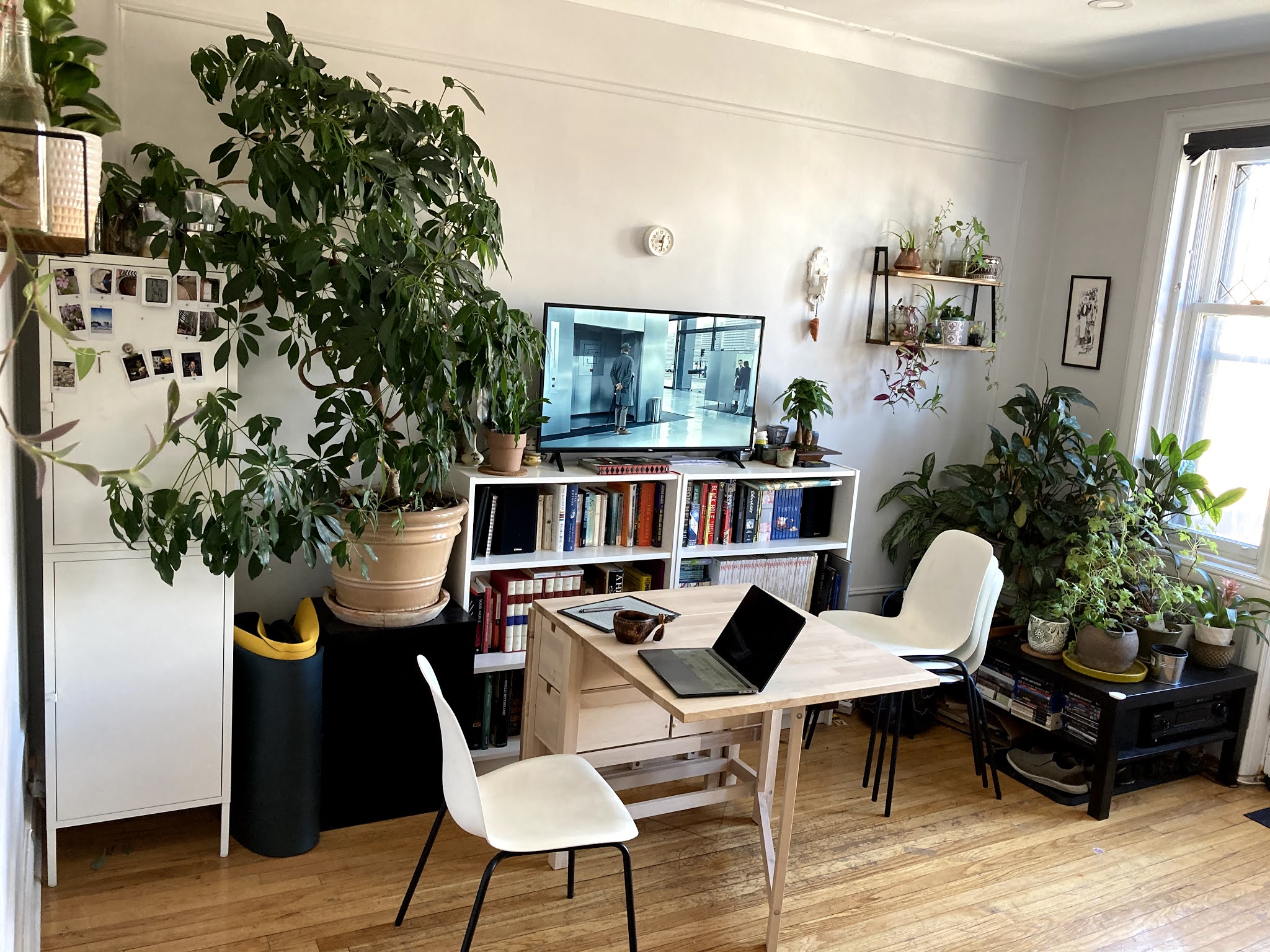
Aditi lent me her workspace today, it's making me happy. The pandemic encouraged her to transform our living room into something very flexible and modular. It's so her, so lush with greenery, part yoga studio, part editorial office, part nonprofit organizing and fundraising space, and ultimately a living space. In this age of mise-en-screen in virtual background, it offers a lot of possibilities. Not pictured is Aditi's "doors" photography series, featuring New Orleans (French quarter) and Montreal (plateau), and our fiction/craft bookshelves.  I've also been playing with the use of cinema to transform TVs from eyesores to art. Jacques Tati's work is particularly suited for it. The mise-en-scène is immaculate. Every frame a perfect tableau. Astonishing sound design: Not music, but musical. Non-narrative: you can absorb the movies over many partial viewings. On a good television, with good audio, the unfolding of a Tati movie is like great painting. It can ...

Coherence in Machine-Assisted Qualitative Research

Image
This is the first  in a  series of posts  exploring  the notion of coherence when using topic  modeling  methods like Latent Dirichlet Allocation (LDA) for qualitative analysis of texts. I'm trying to think about how mechanically measured coherence matters when you are trying to interpret something qualitatively from a large corpus of texts (with the assistance of machine-learning tools). Having estimated many, many LDA models of  similar  corpora of texts over the last few months for one reason or the other , I have started to observe some methodologically salient patterns in coherence . So  this post will amount to me trying to reflect on the tacit knowledge gained from "doing" topic modeling repeatedly. I hope there is value in this for others attempting to use methods like LDA to support qualitative analysis of texts. To illustrate my reflections, I will refer to a "vignette," comprised of R code, results, and visualizations of LDA ana...

Is a gun a gun when no one pulls its trigger? Reflections on the Endnote from Orlikowski 2000, Org Science.

Image
 This is the paper to which I am referring in this post. Orlikowski, W. J. (2000). Using technology and constituting structures: A practice lens for studying technology in organizations.  Organization science ,  11 (4), 404-428. In the endnote of this paper, Orlikowski recounts an interaction with one of the anonymous referees for the paper where the question from the title of this post is posed. Orlikowski asserts that recognition of an object as a gun is culturally specific, members of a society in which nobody has ever used a gun would have no basis for recognizing an object as a gun. She poses a remote tribe in the Kalahari as an example. Knowledge of an object, she contends, comes primarily from its use.  This got me thinking about objects about which society primarily possesses knowledge derived not from use, rather from designs, specifications, manuals, and other texts.  Orlikowski refers to technological artifacts, and I'll take that as a cue to focus o...

Abhivadaye: Lineage in knowledge produced by communities of experts

Image
This is how I count things.  Its weird, I know. I count in base 12. I never gave it much thought before. I was wondering about it this past weekend so I asked my Dad about it during our weekend call. He said it was how Tamil Brahmins are taught to count off their chants. I must have retained it from when I was taught the Sandhyavandanam as a kid. There is a vedic tradition in some communities in south India- that of the elaborate self-introduction. This is called the  abhivadaye  (uh-bhee-VAA-da-yay). In it, in addition to your name, parent's name, and class signifiers, you also declare your scholarly clan, and chosen significant texts. I was taught how to introduce myself like this. In the abhivadaye I see the evidence of interactions between social and semantic structures, and how they produce each other. If there's a single antecedent to my interests in this line of inquiry, it is my meditations on the practice of abhivadaye.    Better scholars than me have...

The Doggo Coat

Image
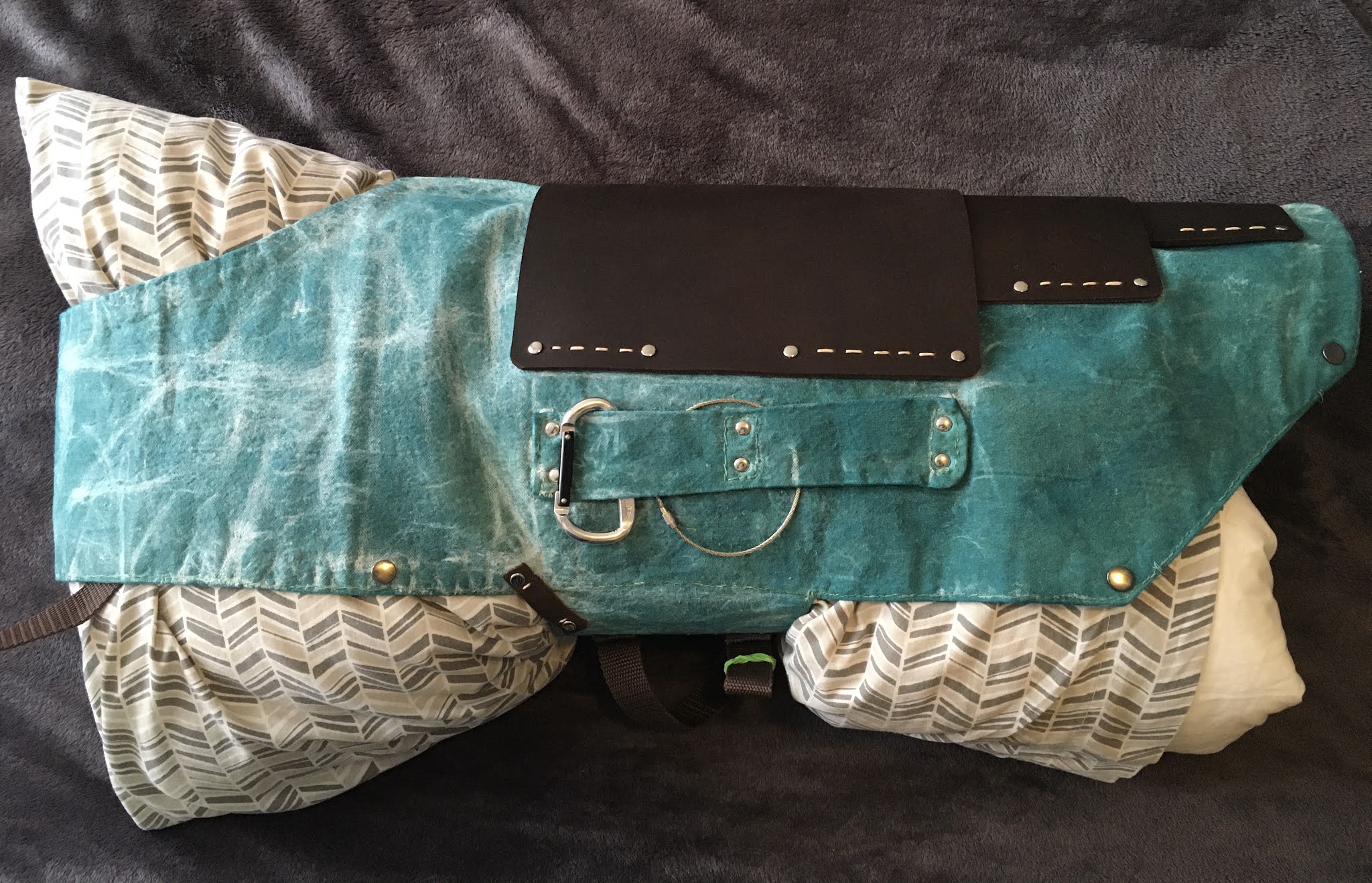
This is my second year in Montréal. What I learned from my last winter here was that woodwork or  whittling were not viable options for me. Winters are largely indoors here. The dust and the chips- that doesn't work for me in my living space. So I think its going to be fabrics and leathers for the next little while. This has increasingly dawned on me as Aditi and I worked on The Doggo Coat. This is a coat for Jasper, my sister in law Pragna's  blue heeler . He lives in Calgary and likes the outdoors. So we want something that is warm, waterproof, and doesnt get in the way of his running around. I used a pattern from Wholefully  as a reference, and to help me get measurements from Pragna over in Calgary.  I decided to go with a waxed canvas and leather outer coat and a detachable inner flannel layer, with webbing  and metal quick release buckles.  I started with 10 oz duck canvas. Washed so it gets a chance to shrink. Cut it to rough shape. I doubled up the ...

Rediscovering writing

Its no coincidence that I started this blog around the same time as I started fieldwork this fall.  There's a profound meditative quality to developing a thought through iterations of text. I'm referring to memo writing, an important aspect of qualitative research methods. I am quite good at maintaining discipline among my numbers. All my quantitative data, be it from a research project or personal logs, are well organized. My folder structure is orderly, my paths consistent, my code annotated and clean. Read JP Ferguson's post on this for inspiration if you want to do this as well. However, the idea of discipline among my words is new to me. Which is why I so glad Samer insists on disciplined memoing to accompany fieldwork. For each observation session, I take field notes, always by hand (delike alpha with a fude nib with iroshizuku shin ryoku ink on 80gsm paper notebooks). I then type out my field notes into a word doc in a secure cloud drive to which Samer has access. T...

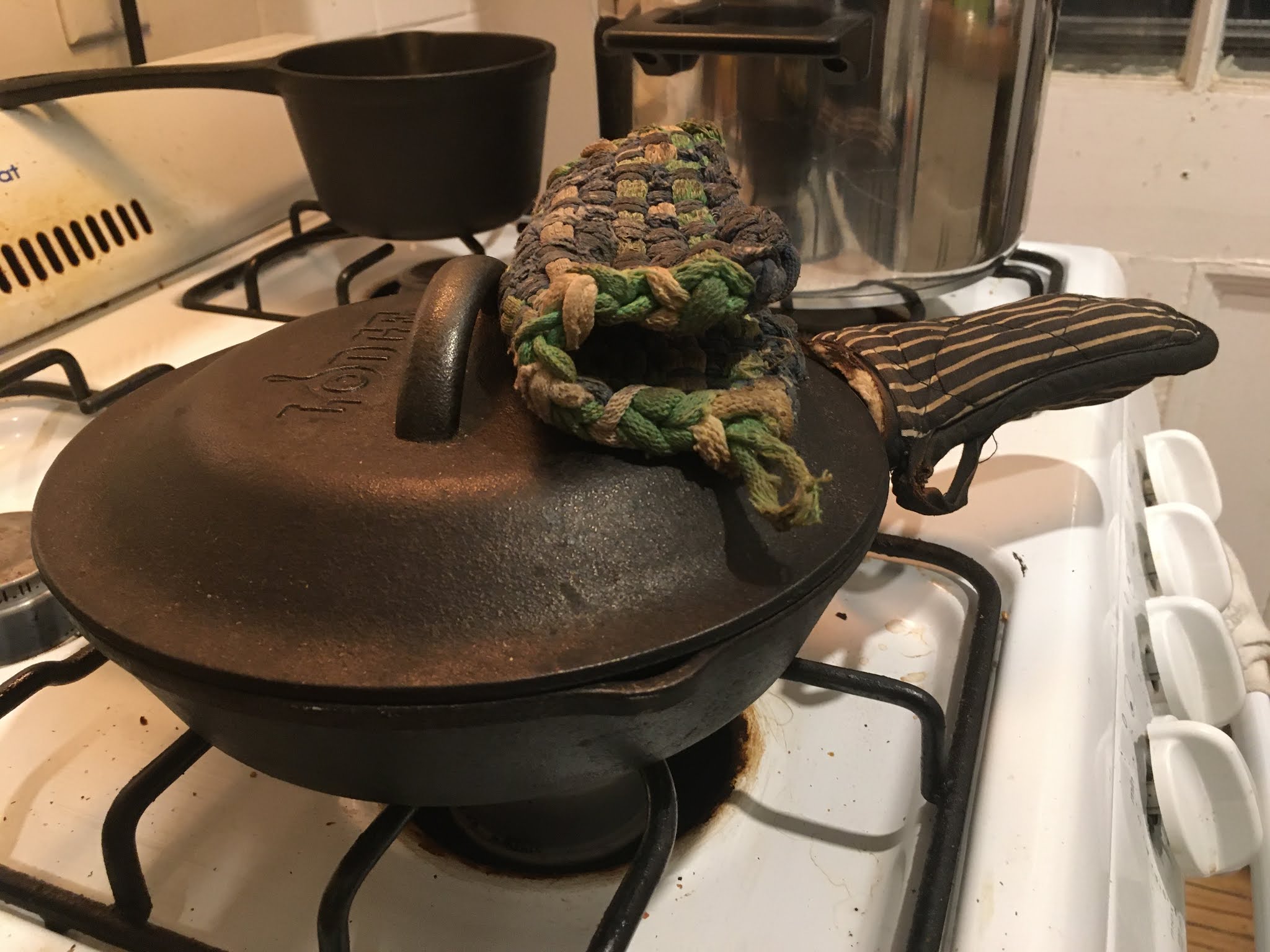
My Coffee Ritual

Image
Coffee is an important part of my life, and my daily coffee ritual changes every few months. My current method for preparing coffee is espresso. The Bean This week, I'm doing a 50/50 blend. I'm working with a Tanzanian peaberry and my usual base bean, the South Indian Malabar " monsooned " or age cured bean. Both are arabica. I bought both beans, unroasted, from Green Beanery . I have hand roasted both beans, each separately in my coffee cast irons to around  City+  this past weekend, so its now 3 days post roast. With African beans, perhaps because of the coffee processing practices in the region, I find that small bits of skin remain on the bean during the roast, which then fall off when I roll the beans in the skillet. With Indian beans, I have found that the whole skin slides off from the bean as a single "husk". This peaberry is quite dense and takes longer to roast than the lighter yet bigger monsooned bean, however the former rolls quite well in the s...